Community and Educational Excavations at Huqoq
Since 2017, the Israel Antiquities Authority has led a community and educational excavation project at Huqoq. The initiative forms part of the Authority's broader mission to investigate, excavate, conserve, and protect Israel's archaeological heritage, while adding an important public dimension: making archaeology accessible to local communities, schoolchildren, young people, and volunteers, and strengthening their connection to the region's rich cultural heritage.
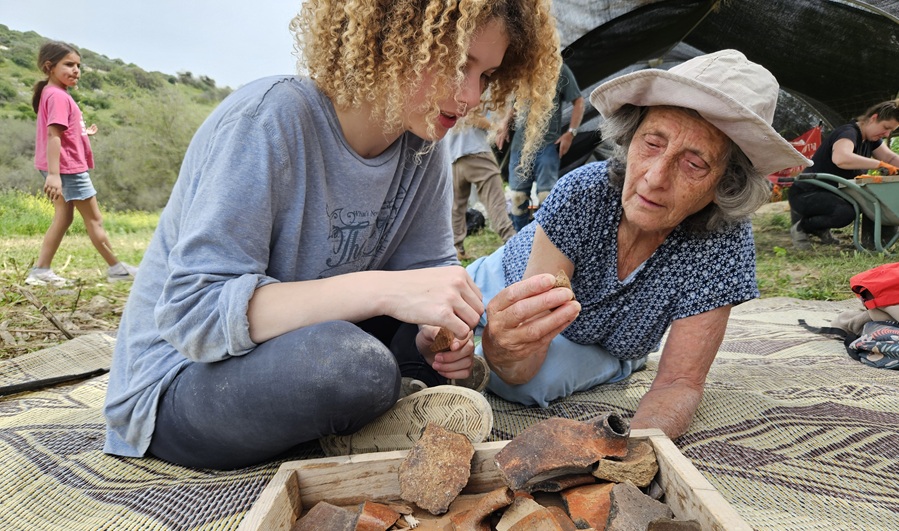
Participants in the community and educational excavation at Huqoq.
Photo: Einat Ambar-Armon, Israel Antiquities Authority.
To date, approximately 25,000 participants have taken part in excavation days, guided tours, open-house events, and a wide range of educational activities at the site. For many, Huqoq provided their first opportunity to experience archaeology firsthand—excavating, sifting, cleaning, documenting, and making initial identifications of archaeological finds.
Through this hands-on experience, participants learn how archaeological excavations are conducted, how artifacts are identified and interpreted, and how pottery sherds, stone vessels, coins, installations, and layers of soil come together to tell the story of an ancient Jewish village in the Galilee.
Encountering the Past Firsthand
The educational program at Huqoq welcomes a wide variety of participants. Over the years, it has hosted school groups from communities throughout the region, including schools in the Jordan Valley Regional Council and neighboring municipalities, as well as students and youth groups from across northern Israel and the country as a whole.
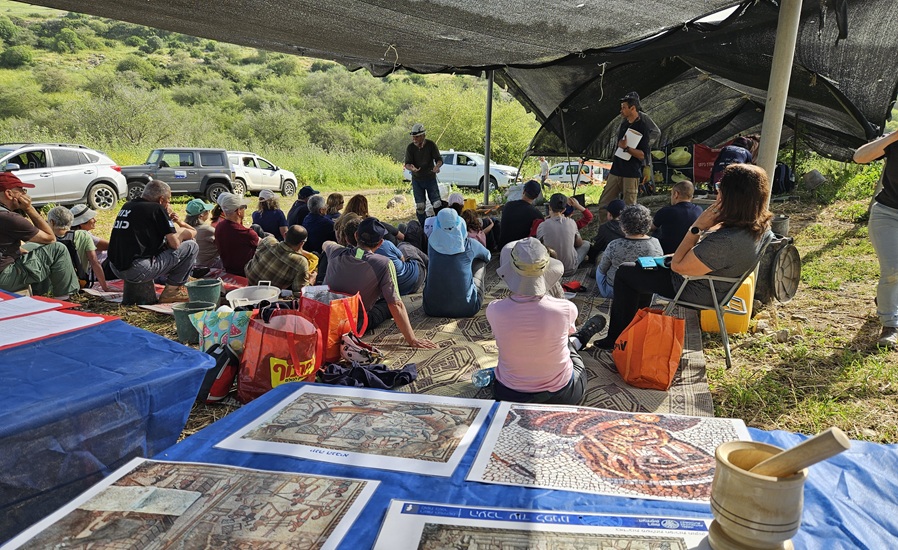
Community and educational activities at Huqoq.
Photo: Einat Ambar-Armon, Israel Antiquities Authority.
For these participants, the site serves as an open-air classroom where the past is explored through observation, practical work, and the questions that naturally arise from direct engagement with archaeological remains.
Alongside school programs, Huqoq also hosts university students, pre-military academies, soldiers, families, volunteers, and community groups from across Israeli society. Particular emphasis is placed on participation by Arab communities. Working together in the excavation creates opportunities for people from diverse backgrounds to connect through shared heritage, the local landscape, and archaeological discovery.
The educational excavations take place outside the excavation areas of the Huqoq Excavation Project. During the early years, work focused primarily on the site's agricultural installations and the eastern part of the tell. Over time, the project expanded to include additional agricultural features, including winepresses, quarries, and installations associated with agricultural production and the use of natural resources.
In recent years, excavation has also concentrated on the underground hiding complex, the spring area, and the ancient road. Together, these areas reveal Huqoq as a complete living landscape—a place of homes, agriculture, work, trade, water management, and responses to periods of conflict and danger.
Volunteers: An Essential Part of the Story
The volunteers who have accompanied the excavations over the years are an integral part of the Huqoq story. Many return season after season, assisting with archaeological excavation and conservation work, contributing their time, experience, and enthusiasm while helping build a vibrant community around the site.
Their contribution strengthens the connection between the archaeological site and the wider public and reflects a shared commitment to preserving both the ancient remains and the heritage they represent.
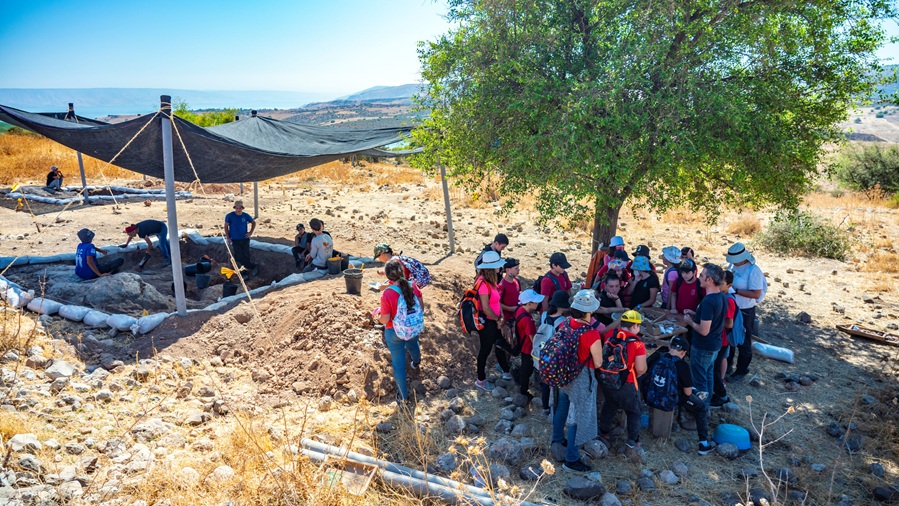
Community and educational activities at Huqoq.
Photo: Einat Ambar-Armon, Israel Antiquities Authority.
The educational excavation enables participants to learn through direct experience: working as part of a team, observing small details, asking questions, distinguishing between archaeological evidence and interpretation, and discovering how historians and archaeologists reconstruct the past from fragmentary remains.
In this way, archaeology becomes far more than a subject to study. It becomes a meaningful, hands-on experience that connects people with place, links past and present, brings together research and community, and fosters a lasting sense of responsibility for protecting Huqoq's heritage for future generations.