Rehabilitation in the Gaza Border Region
Ynet
Yuval Gamliel,
in cooperation with KKL-JNF
The southern region suffers from a severe lack of medical infrastructures. In fact, until not so long ago it was impossible to receive advance rehabilitative treatments of the type that people living in the central region receive on a daily basis. Everything changed with the establishment of the Ezra Lamarpe Rehabilitation Center in Sderot with the help, among others, of KKL-JNF. “This place is a lifesaver for me,” says Liraz, who suffers from cerebral palsy.
“If in the past I used to get treatments once every few months, thanks to the Center in Sderot I now get physiotherapy twice a week, and hydrotherapy once a week. This is the largest number of treatments I ever received in my life, and I can absolutely feel its effect on my everyday life.”
Liraz Medina, a 33 year-old chemist who lives in Sderot, was born with cerebral palsy (CP). It was her legs that were mainly affected, and as a result, she limps. As someone born with this disease, Liraz has received rehabilitative treatments since she was born, and for years she suffered from the critical lack of rehabilitation centers in the south, which forced her to travel to centers in the central region of the country.
All this, however, has become a thing of the past as far as Liraz is concerned. For the past half a year, she goes for treatments at the new and sophisticated Ezra Lamarpe Rehabilitation Center that was built in Sderot, which Liraz says has changed her life. “The Center simply changed my life,” she says.
40 year-old Ayala Shmuel from Moshav Zimra, which is located near Netivot, also calls the center as a lifesaver. She arrived there after a serious car accident together with her husband last March, which caused her to develop fibromyalgia, a disease that causes severe and chronic pains in all the body’s muscles.
“Simple daily activities like opening a can or packages of tea and coffee are difficult for me,” she says, “but now I come here every week for pilates treatments, emotional therapy and also hydrotherapy treatments in a therapeutic pool, which gives me strength to go on living. If I don’t go for a week I simply can’t move and I have terrible pain in my entire body, to the extent that I can’t fall asleep at night because of the pain.”
How long have you been going for treatments at the Center?
“For about a year. I feel as if this wonderful center was built just for me. The staff is so dedicated, even the cleaning ladies do above and beyond for the patients. There’s nothing like it in the entire country, they give so much care and love to the people who come here.”
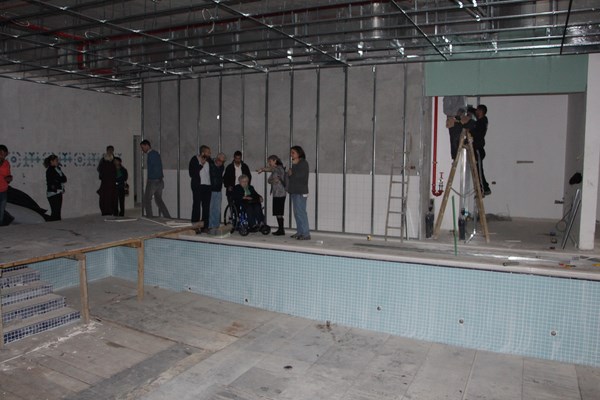
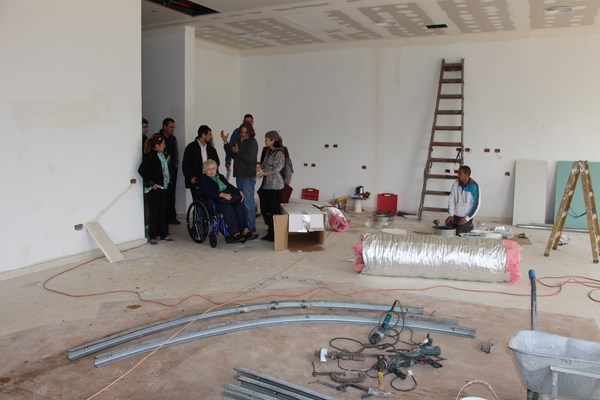
The Sderot Medical Rehabilitation Center was built in March 2017 by Ezra LeMarpeh, an NGO headed by Rabbi Firer. The NPO cooperated with the Sderot municipality and the Ministry for the Development of the Negev and Galilee to establish this trailblazing center for the first time in southern Israel, all free of cost for patients.
“The Rehabilitation Center was established after a special survey was conducted in the southern periphery, which showed that in the south, medical services are sorely lacking as compared to what is available for the residents of the central region. The situation was already at the level that if a person had an accident or a disease and they needed rehabilitation after being in the hospital, it was almost impossible to receive it locally,” said Margalit Tirosh, Director General of the Ezra Le’Marpeh Rehabilitation Center. “Rabbi Firer said that if we’re already doing something in the south, then let’s build it in Sderot, a city that stands strong in the face of the attacks from the Gaza Strip, and that’s how Sderot was chosen.”
“We finish the center’s pilot project in April of this year, and now it’s working beautifully, providing treatment for 900 patients from ages 18 to 80 monthly. We focus on people whose age enables them to work with the goal of getting them back in the work force, in order to allow them to lead and independent and regular life. Our hope is to serve 5,000 patients.”
Tirosh adds that “just to give you a sense of things, when a person is released from the hospital after an accident or some sickness, they receive twelve rehabilitative treatments as part of their public medical insurance. We, on the other hand, provide 100 treatments.”
Returning to the South for Treatment
Medical services available at the Center include an advanced hydrotherapy swimming pool where physiotherapy treatments are provided, emotional therapy for people suffering from post-trauma, art therapy, occupational therapy, cooking therapy, gardening therapy and more. “All this intensive therapy makes a huge difference, and people become capable of standing on their own two feet once again,” Tirosh says.
And in fact, there are instances where the reputation of the advanced, cutting-edge rehabilitation center was such that people came back to live in the Gaza Border region at this tense time only in order to live in close proximity to the Sderot Rehabilitation Center. This, for example, was the case for Avner Galini (66), who had a serious stroke while living with his wife Devorah in distant Nigeria.
“In July of last year, Avner, who was working as a company director in Nigeria, had a stroke that affected the left side of his body. Since we wanted him to be treated in Israel, he was flown to Tel Hashomer Hospital, and then he was transferred for rehabilitation at Beit Levenstein,” said Devorah, his wife. In light of the fact that Avner is originally a member of Kibbutz Nir Am, the couple decided a year and a half ago to come back and live in the kibbutz for the intensive treatments.
“Avner was the first patient to be accepted at the Center, and we were received with a lot of warmth and a very homey feeling,” Devorah relates. “Rehabilitation at the Center during this period was so amazing that anyone who saw Avner a year ago can’t believe how his condition has changed so radically since then. A good example of the human relations at the center is that when the medical staff was getting to know Avner, they discovered that he really loves basketball and even used to play professionally in his past. The staff decided to organize a few other patients who like sports like Avner does, and that’s how the basketball team for people in rehab was established. There’s no other medical institution that relates to people this way.”
Director General Tirosh explains that the Center was built according to the highest and most modern standards in the field of medicine, and is located in a protected structure that can operate even under the threat of missile attacks. “The cost of building the Center was close to forty million dollars,” she says. “It serves all the Gaza Strip border communities, Ashkelon, Sderot, Kiryat Gat and Beersheva – actually, people come to us from all over the south. Besides a small amount of money from the Israel National Authority, the Center is able to operate mainly thanks to contributions from Israel and around the world. One of the main contributions to the Center – one that we simply wouldn’t exist without it – was from Keren Kayemeth LeIsrael – the Jewish National Fund.”