The 12th Prof. Nahum Galil International Conference on Water Engineering and Innovation opened Tuesday, November 10, at Beit Gabriel, on the shores of the Sea of Galilee. Organized by Kinneret Academic College and WaterEdge.IL, the water innovation community, as part of Israeli Water Week, the conference took place against the backdrop of the Sea of Galilee's water level dropping below the lower red line and growing concerns about potential damage to critical infrastructure.
Hundreds of senior government officials, researchers, engineers, and industry professionals from Israel and abroad gathered to discuss the water sector's preparedness for emergency situations and explore solutions to the challenges ahead.
Among the conference speakers were Yehezkel Lifshitz, Director of the Israel Water Authority, who addressed the water sector's preparations for future challenges; Dr. Amir Givati, Director of the Israel Meteorological Service, who discussed climate forecasts and their implications for water resources; and experts from the United States and Switzerland who examined the security of water infrastructure and the prediction of system failures.
A dedicated Keren Kayemeth LeIsrael–Jewish National Fund (KKL-JNF) session focused on research into the restoration and management of natural water resources.
The conference also featured research and developments in artificial intelligence, including models for forecasting the Sea of Galilee's water level, real-time monitoring of water systems, and improving the management of water and wastewater infrastructure. Among the examples presented were studies using advanced AI tools to analyze past patterns and forecast potential future events.
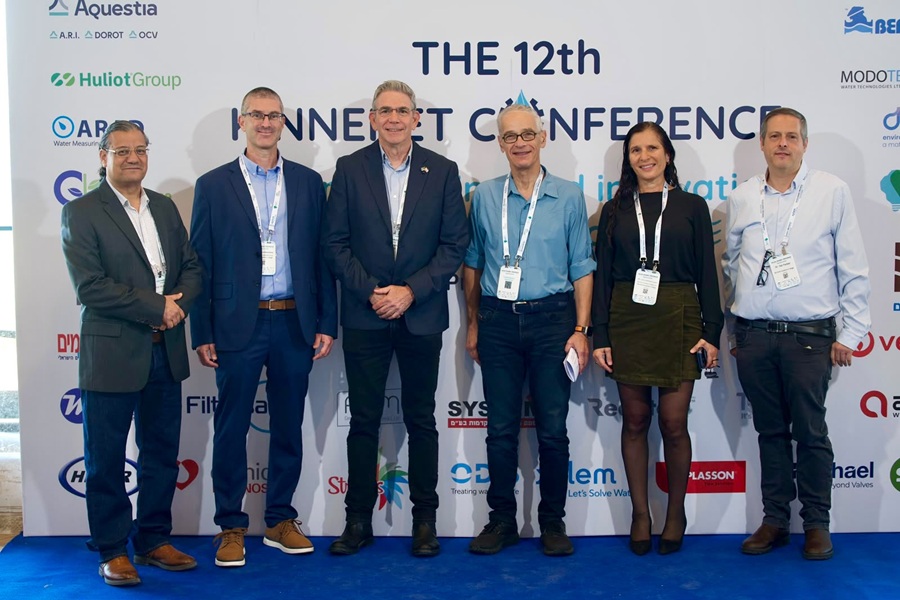
Photo: Yariv Castiel
Alongside the conference, a professional exhibition featured leading companies in the water sector, including Amiad Water Systems, Aquastia, and Rafael Valves. The exhibition showcased developments in desalination, wastewater treatment, and water infrastructure management, including systems designed to prevent water hammer and advanced monitoring technologies.
Prof. Ran Sotskoverin, Dean of the Faculty of Engineering at Kinneret Academic College, said:
“A water crisis does not begin on the day the water stops flowing from the tap, but long before that. Israel has accumulated extensive experience in dealing with water scarcity, but the challenges are changing, and we cannot rely solely on solutions from the past. Preparing for future crises requires investment in research and in training water engineers who can identify risks early and develop solutions before an emergency arises. This is one of the most critical professions for the water sector in particular and for the State of Israel as a whole.”
Eyal Ostrinsky, KKL-JNF Chairman, said:
“Where there is water, there is life. 125 years ago, KKL-JNF set out on its journey to build the foundations for the independence and resilience of the State of Israel, where agriculture, settlement, and security are not merely Zionist values, but the backbone of our national strategy. Water is an essential condition for national security. Throughout the generations, we have translated this vision into decisive action on the ground. Today, in the face of the challenges posed by the climate crisis, we continue to lead through infrastructure, innovation, and an unwavering sense of national responsibility, to ensure Israel's strength and future.”